Sacred Steam: Why you haven’t truly experienced coffee until you’ve visited East Africa
The sweet, woody scent of frankincense drifts across the room, curling into soft grey ribbons against the morning light. Before you sits a woman clad in a hand-woven white habesha kemis, gently shaking a flat iron pan over glowing coals. Inside, raw green coffee beans turn glossy and deep espresso-black, crackling like dry twigs in a campfire.
This isn't a quick morning stop at a neighborhood coffee shop. In East Africa, coffee is never rushed, grab-and-go, or reduced to a paper cup with a plastic lid. It is a sacred, slow-travel ritual, a doorway into living history, communal warmth, and true African hospitality.
The Four Stages of the Sacred Coffee Ritual
In both Ethiopia and Uganda, taking part in a traditional coffee ceremony means slowing down to honor the land and the hands that harvested every cherry.
1. The Aroma (The Roast): The ceremony begins when green beans are washed and slow-roasted over charcoal. Once dark and glistening with essential oils, the host wafts the roasting pan toward each guest so everyone can inhale the fragrant smoke, a traditional gesture of welcome and respect.
2. The Grind (The Sound): The roasted beans are transferred into a heavy wooden mortar (mokecha) and crushed by hand with a heavy pestle. The steady, rhythmic thud becomes the background pulse of the room.
3. The Brew (The Clay Jebena): The ground coffee is simmered with water in a spherical black clay vessel called a jebena. As it boils, steam escapes through the neck, carrying notes of floral jasmine, dark chocolate, and roasted spices.
4. The Three Rounds (The Blessing): Coffee is poured in a continuous stream from high above into small handleless porcelain cups (fini), often served alongside fresh popcorn or aromatic grasses strewn across the floor.
Did You Know? A traditional ceremony includes three rounds of coffee. The first round (Abol) is strong and bold; the second (Tona) is smoother; and the third (Baraka) carries a spiritual blessing for your safe journey ahead.
Two Distinct Coffee Journeys: Ethiopia & Uganda
1. Ethiopia: The Ancient Birthplace of Arabica
Legend tells of Kaldi, a 9th-century goat herder in the lush highlands of Kaffa, who noticed his herd dancing with energy after eating red berries from a wild bush. Today, visiting Ethiopia allows you to experience Buna the traditional ceremony in authentic village homes, bustling urban markets in Addis Ababa, and historic coffee forests where wild Arabica still grows untamed.
2. Uganda: High-Altitude Arabica at Sipi Falls
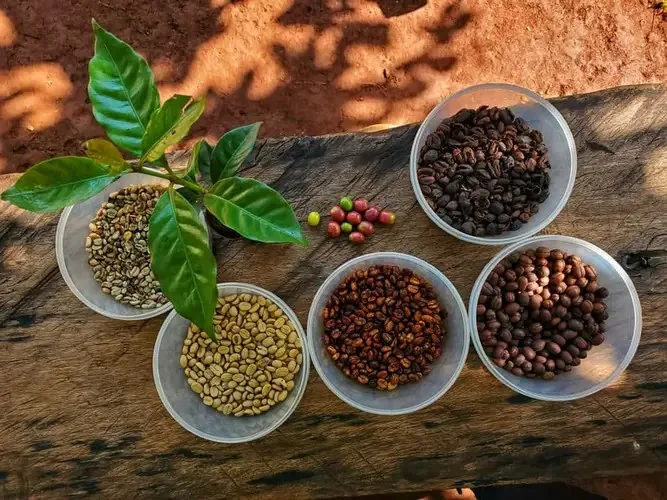
Along the misty, volcanic slopes of Mount Elgon in Eastern Uganda, coffee travel becomes hands-on. Here, you walk alongside local Bagisu farmers through high-altitude green canopy, picking crimson cherries directly from the branch. You'll husk, roast, and crush your own beans over open flames before sipping a piping-hot mug while overlooking the roaring 100-meter drop of Sipi Falls.
Experience the Soul of East Africa With Us
A wildlife safari shows you Africa’s majestic landscapes, but sitting down for a traditional coffee ritual introduces you to its heart. When you travel with us, every itinerary weaves genuine cultural encounters alongside your wilderness adventures.
Ready to swap your morning commute for fresh coffee brewed over open embers in the highlands of East Africa?

Discover Uganda’s Empaako Tradition: A Journey into Living Culture
Uganda Through Dance & Storytelling, “Village Homestays in Uganda"
Read More